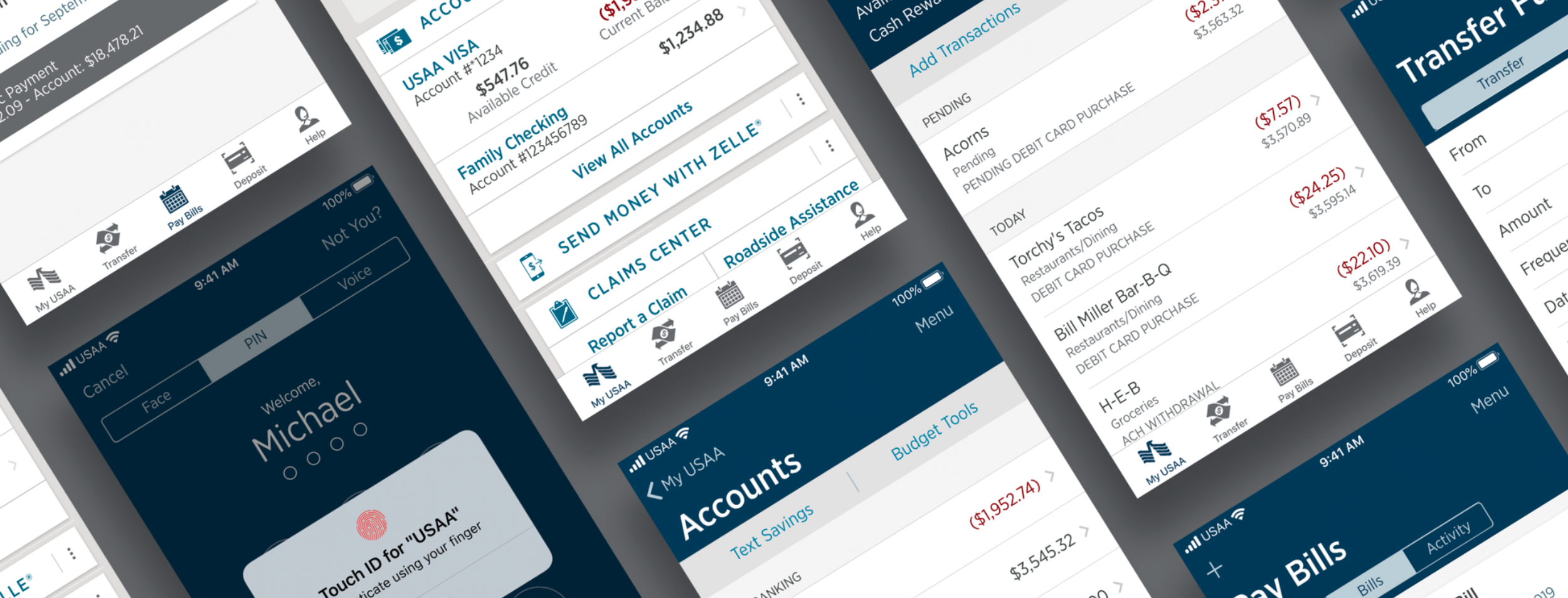
USAA: Native Design Language System Research
MY ROLE: SENIOR DESIGNER
My responsibilities for this project included research, interviews, content design,
visual design, interaction design, prototyping, and quality assurance.
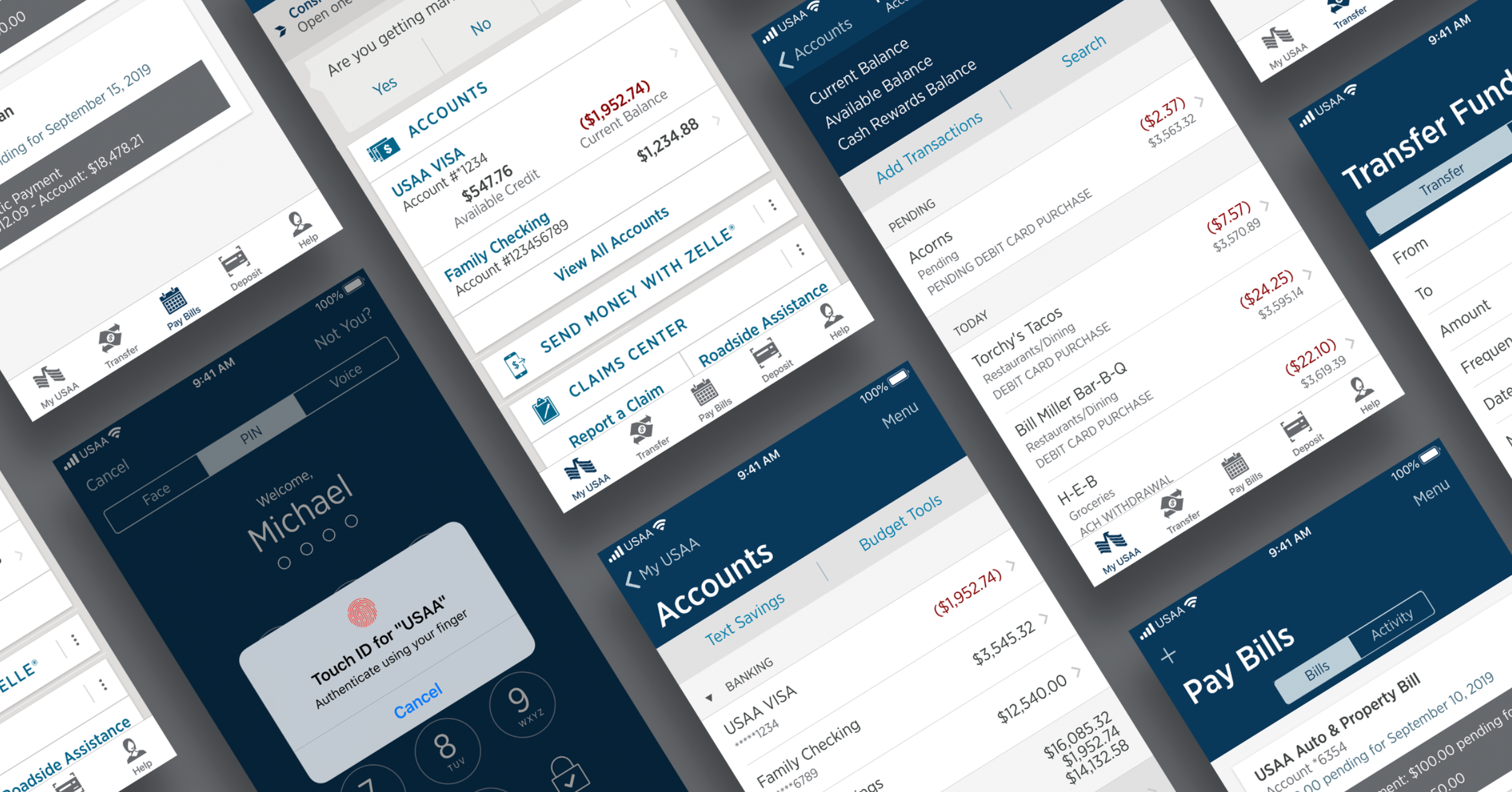
In the process of building their industry leading Design Language System for web environments, the USAA Chief Design Office recognized the need to re-define a design library for their native mobile platforms, Apple’s iOS and Google’s Android OS (Material Design). The previous versions of their native effort was based on simple style guides and a few custom UI components. A complete comprehensive system was much needed to take the design process to the next level and grow a native design team.
Two other designers and I were hired specifically to evaluate and overhaul the native application user experience based on these new design system requirements. This generative research process took the majority of the first 6 months. We decided to conduct a native design community workshop with these main goals:
Consistent interaction & design patterns for our native apps
Shared ownership of the language with the design community
Assets, guidance and tools that speed up the work of the project teams in our design community
Objectives
Future state: what do design teams need from us and how do they see native design at USAA evolving?
As a Native Design Team, we need to collect insight from the community to learn what components are needed to address user interaction problems in our native apps.
Additionally, we need to gather ideas from the community on how details from the brand, the “web” design language, and the native platforms will be represented in our native apps.
Kit and guidance feedback: specific inquiry around organization and release 1 as well as documentation
As a Native Design Team, we need to understand the needs of the design community when using the (Sketch) UI kits, as well as
Understand the level of documentation the design community would find most useful when designing and explaining choices to stakeholders.
Timeline
We planned the research workshop to take 8 weeks. It included: methodology development (2 weeks), communication & recruiting (2 weeks), interviews (1 week), synthesis (2 weeks), read-out design/creation (1 week), and share-out to the overall design community.
Interviews
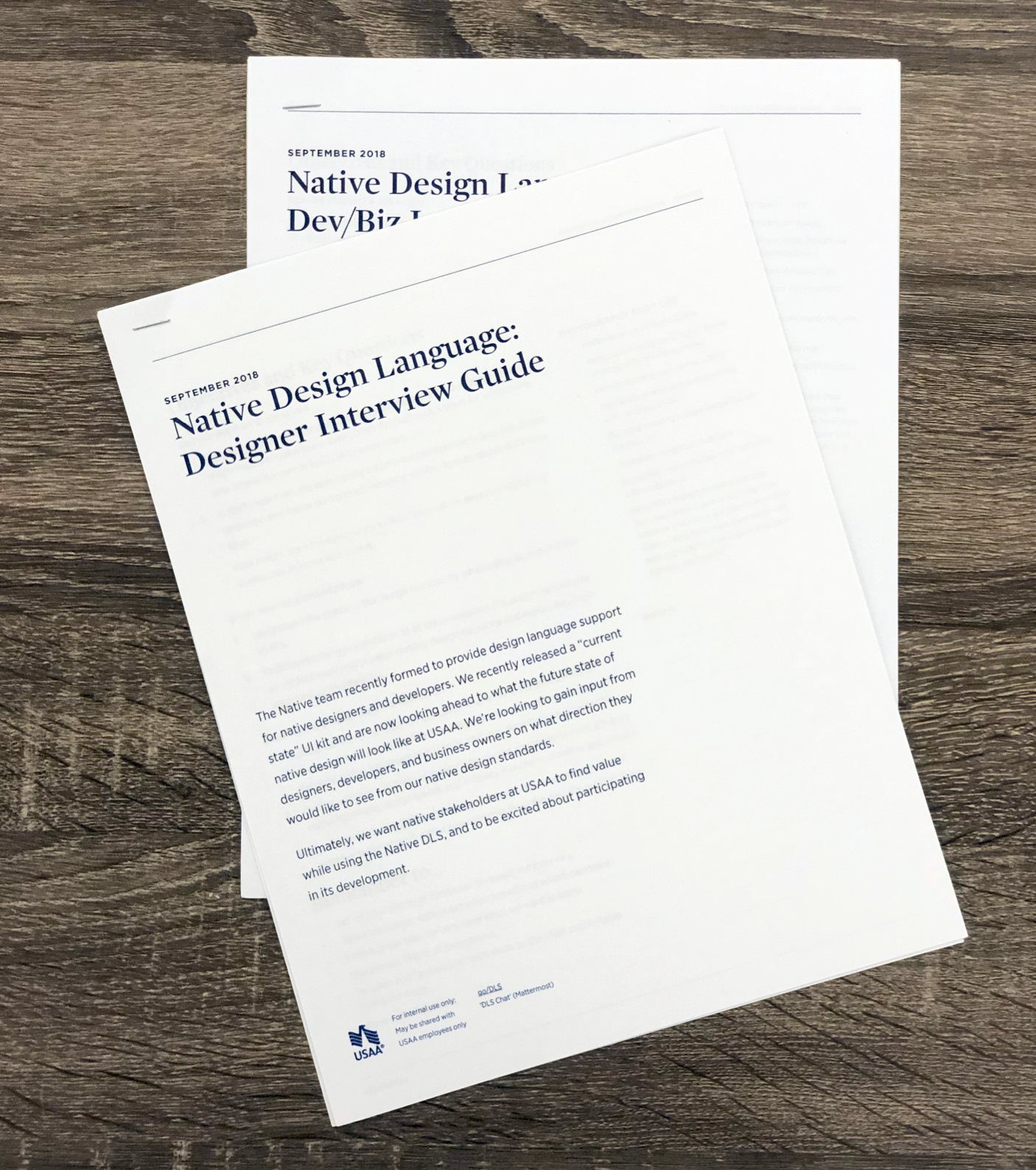
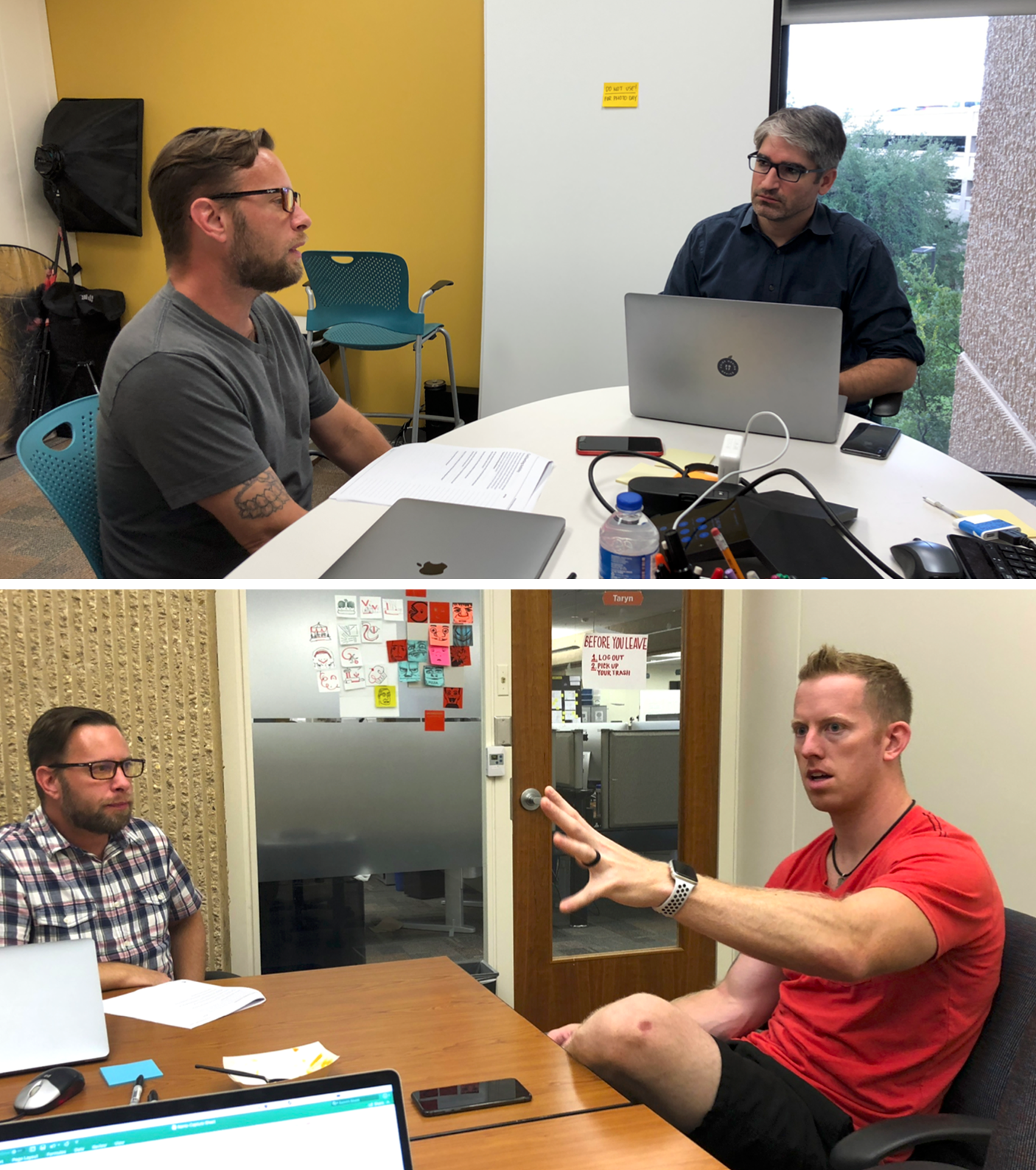
The interviewing process consisted of 11 different designers spanning all lines of business, 5 native developers, and 4 business partners, all who were eager to give us insight and answer questions about design teams, design assets, documentation, and the overall feeling of native apps in our design community.
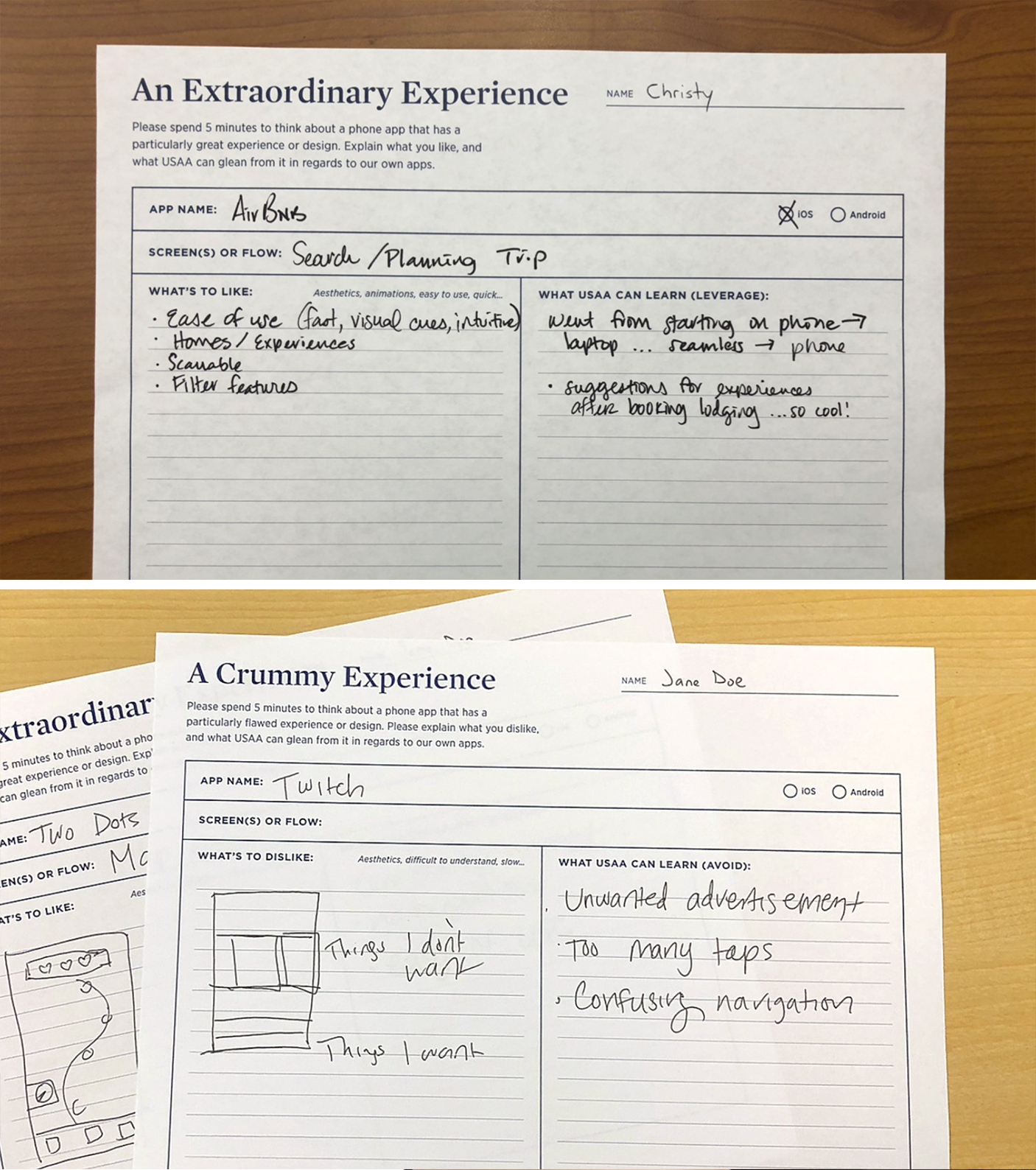
Activity time! Here we asked the participants to pick out an app on their personal phone and tell us about the experience. Some had exceptional apps, some had “crummy” apps. We wanted to understand what made the apps this way and what we at USAA, leverage in regards to our own apps/experiences.
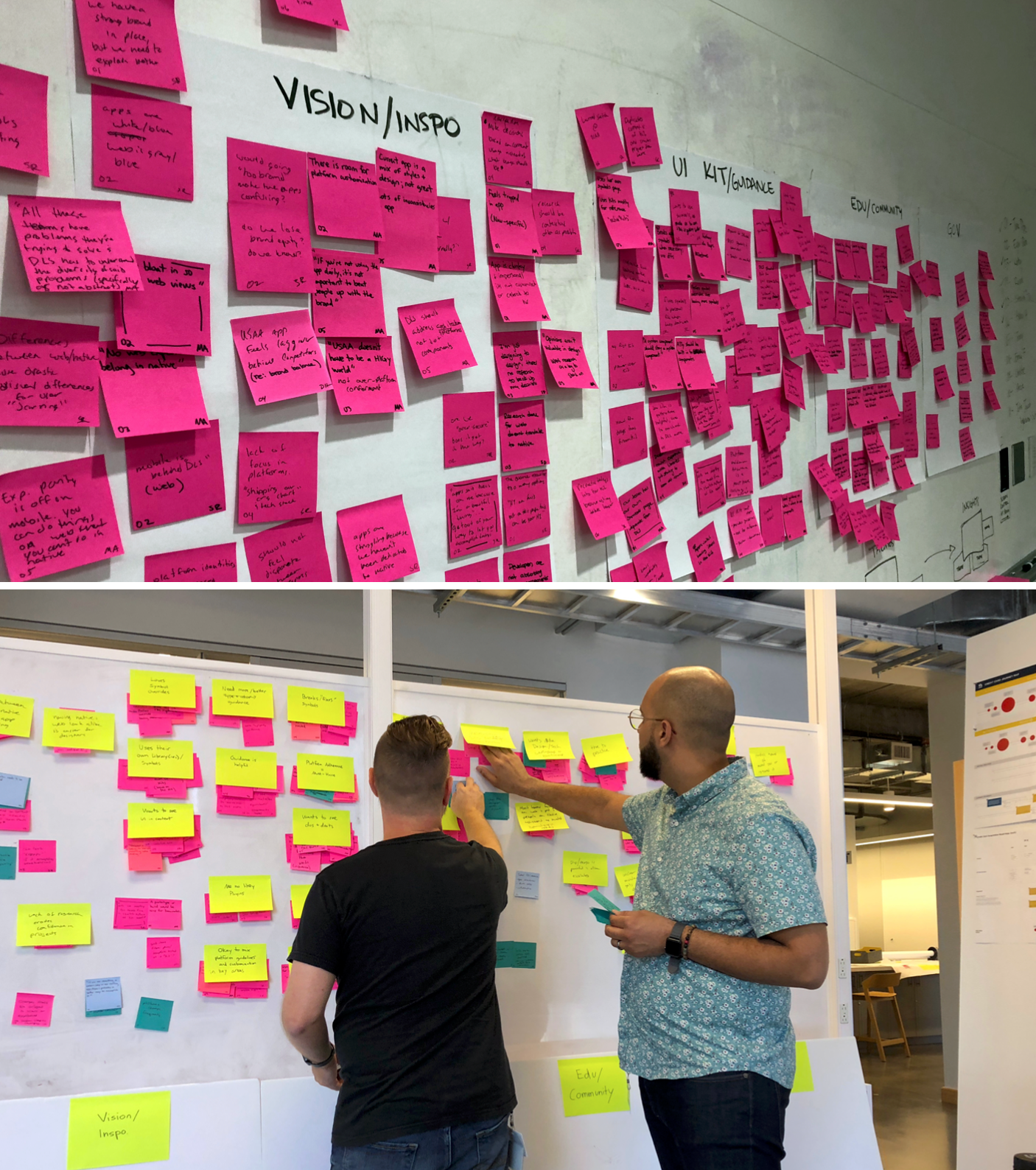
After conducting the interviews, it was time to synthesize all of the conversations and notes to find patterns and/or themes that would start helping our objectives and answering some of our hypothesis. Some themes that came out were, the app visuals should be simplified, consistent, and adhere to platform conventions, there are opportunities to inject brand and customization, and to use member information to personalize the experience.
What’s Next?
After all of the research, we took the findings and applied the data to high-level practices. This would be a way to narrow down opportunities for improvements in the existing UI kits and build for the future design system. These practices included:
Hosting a “DLS Workshop” partnering with the Transfer Funds team.
Integrating DLS designers into key projects to build components based on project scope
Create high-level guidance to help teams with Digital Governance.
Partner with Accessibility operations to create accessible and compliant UI components.
Strategize how to support a reusable code base from a component library.
Design systems by nature are organic, ongoing processes. The research that was conducted brought a wealth of information from the design community, who are the system’s users. Without their adoption, there would be no system.
USAA iOS Version 1.0
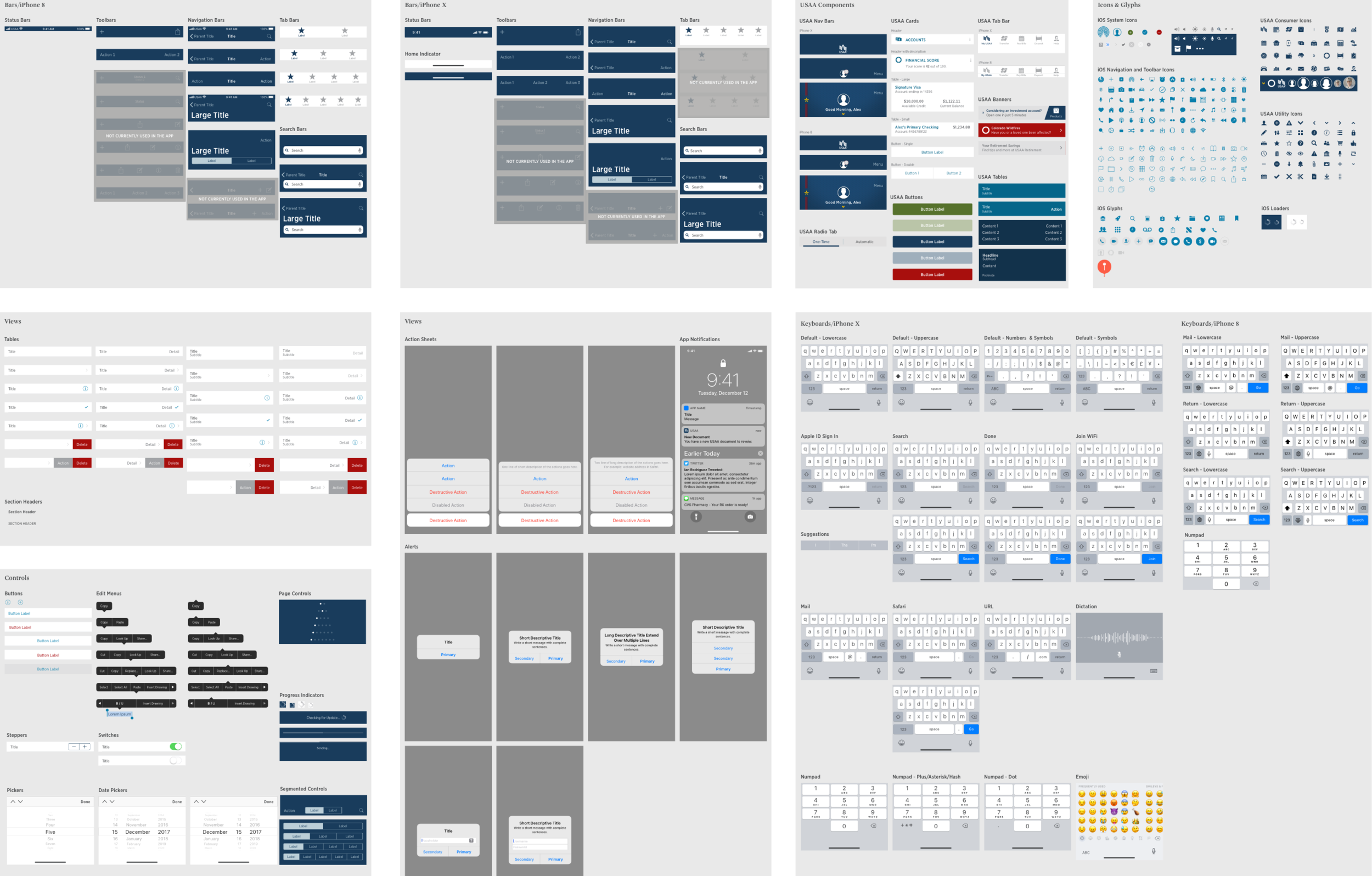
Guidance Documentation
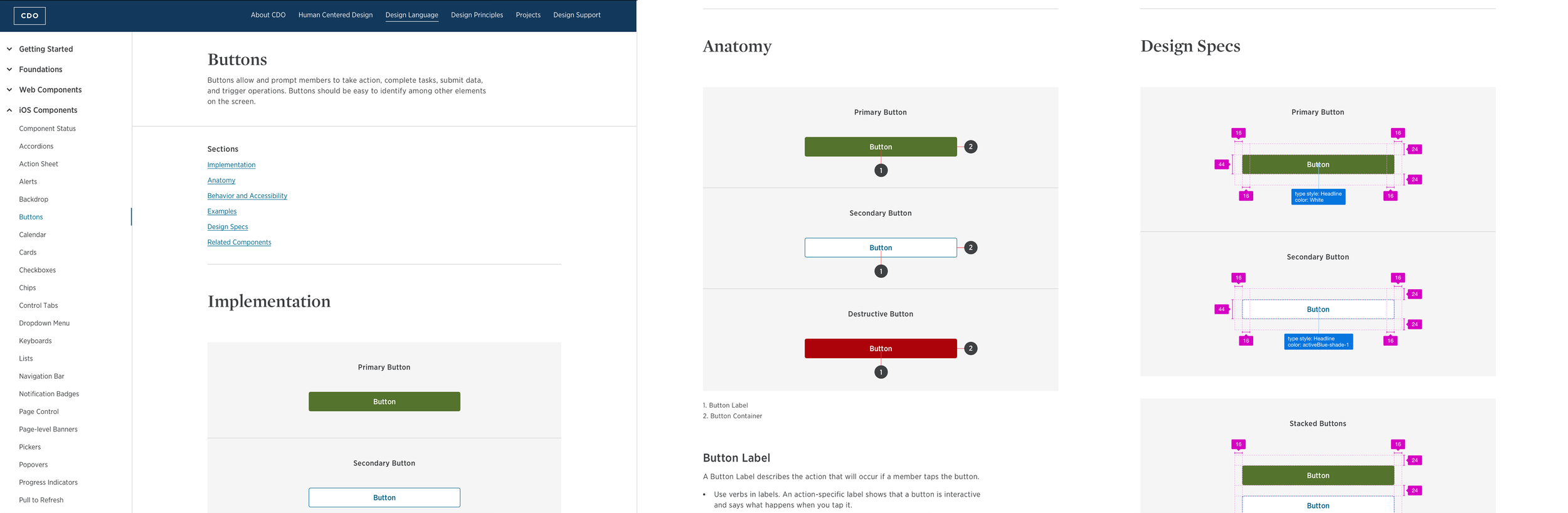
The guidance plays a critical role in maintaining the design system. The system needs to become self-sufficient to withstand change—tech change, people change and process change. Establishing the rules early on will help the system evolve through these changes.